
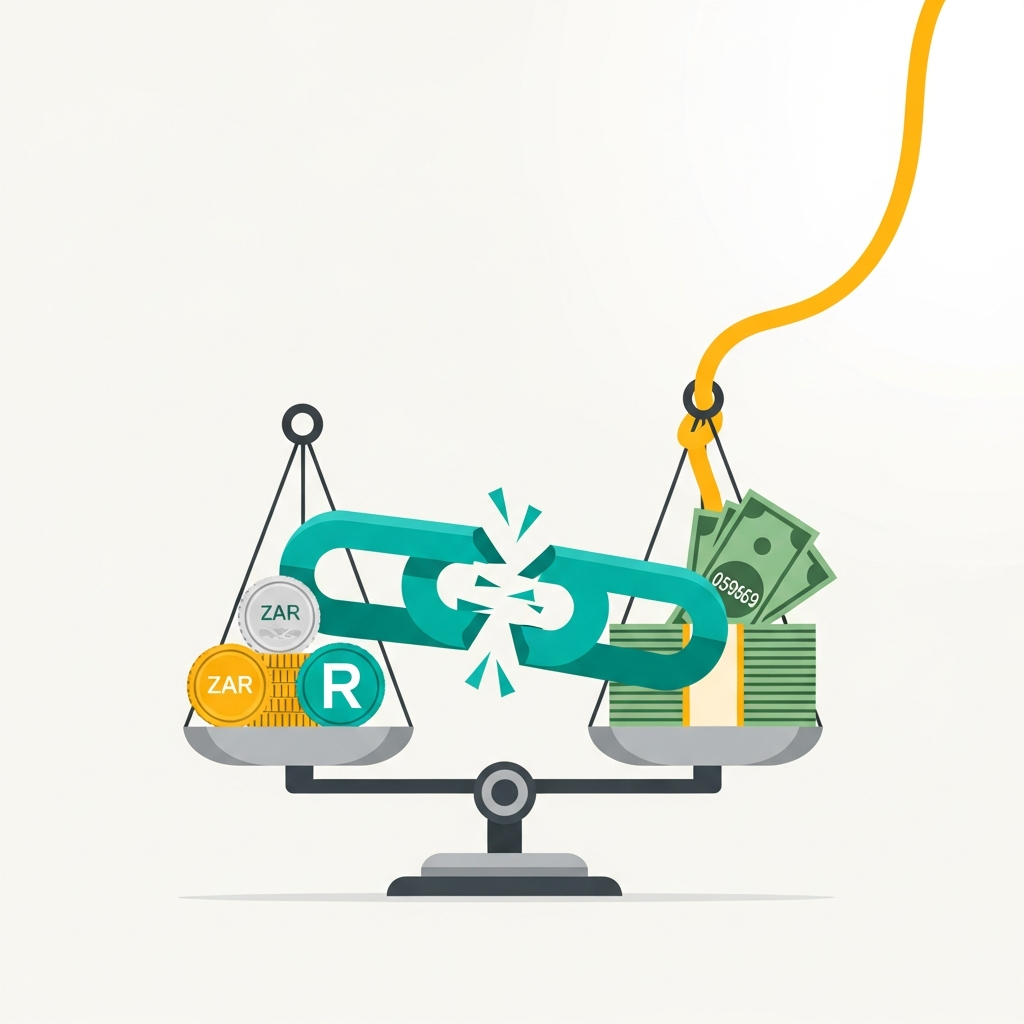
Right now, you're probably looking at your bank statement and thinking: "Eish, this is hectic." Multiple loan payments. Store cards. Credit lines. Each one with its own interest rate, its own due date, its own little corner of your credit report.
Debt consolidation sounds like the answer. One loan, one payment, one rate. But should you actually do it?
What We're Really Talking About Here
Debt consolidation means taking out a single loan to wipe out several others. That's it. Simple. You roll multiple debts into one lump, and you're left with one debit order instead of four or five scattered around your month.
The National Credit Act regulates this. Any credit provider offering these loans — whether it's Capitec, FNB, or Nedbank — has to follow the same rules. Affordability assessments. Interest rate caps. No reckless lending.
But here's the thing. Just because you *can* consolidate doesn't mean you *should*.
When This Actually Works
Consolidation makes sense in specific situations. You're paying store card rates of 21-22% on some debts, maybe a credit card sitting at 19%. You qualify for a consolidation loan at, say, 16%. The math works. Your monthly payment drops. You can see the light at the end of the tunnel.
You've got to be clear-headed about it though. Recent NCR data shows 36% of credit-active South Africans have impaired credit records. If that's you, consolidation might not even be an option until you clean up your payment history.
The other requirement? You have to actually commit to not borrowing more once you've consolidated. I've seen people consolidate three times because they kept opening new store accounts after paying off the old ones. That's not consolidation, that's just debt stacking with extra steps.
When You Should Walk Away
If you're borrowing to pay off secured debt (like a car loan), don't consolidate into unsecured credit. You'll lose the car, but you'll still owe the debt. If you're extending your repayment period from 36 months to 60 just to lower the payment, you're paying thousands more in interest. Do the maths yourself — don't just look at the monthly amount.
The Numbers Nobody Wants to Discuss
FNB's consolidation offering goes up to R360,000 over 72 months. Nedbank caps theirs at R300,000. Capitec sits somewhere in between, depending on your circumstances. But the interest rates? They're all anchored to the same thing: repo rate plus a margin.
The current repo rate is 6.75%, which means the prime lending rate sits at 10.25%. Most banks will offer you something like prime plus 5% to prime plus 15%. That puts consolidation rates somewhere between 15-25%, depending on your credit profile.
Compare that to what you're paying now. If you're carrying store card balances at 22%, consolidation at 17% is actually a win. If you're already at 15% on most debts, consolidation won't help much.
Consolidation vs the Debt Review Alternative
Debt review is a completely different beast. That's the legal process under the NCA where a registered debt counsellor renegotiates your debts with creditors. They might reduce your payments by 30-40%. It wipes your credit report for a few years, but if you're truly drowning, it's sometimes the only way out.
Consolidation? That's for people who can still manage their payments but want to simplify and lower their rate. You're not drowning. You're just tired of juggling.
The Hidden Costs People Skip
Nobody talks about this, but there are fees. Initiation fees. Monthly service fees. Credit life insurance (which you might or might not want). These get rolled into your APR, which is why you need to look at APR, not just the interest rate.
Let's say you consolidate R50,000. An initiation fee of 2.5% is R1,250 right off the top. Monthly service fees of R50 add up to R600 over a year. That changes your effective rate significantly.
Responsible lenders will show you all this upfront. If a lender is vague about fees, walk away. You can apply for loans with bad credit if needed, but never with a lender who won't be transparent.
Three Things to Do Right Now
First, list every debt you have. Include the balance, the current interest rate, the monthly payment, and the time to maturity. This is your baseline.
Second, calculate your debt-to-income ratio. Take your total monthly debt payments and divide by your monthly income. If it's above 50%, consolidation alone won't fix your problem — you need to earn more or spend less.
Third, get quotes from at least three lenders. Capitec, FNB, Nedbank. Check the APR, not just the monthly rate. Some lenders will do preliminary quotes without affecting your credit score.
The Honest Truth
Consolidation is a tool. It works brilliantly for some people. For others, it just delays the real problem — which is usually that they're spending more than they earn.
If you consolidate and then open three new store accounts because you've got "free credit" now, you've wasted the opportunity. You haven't solved anything.
But if you consolidate because your rate genuinely improves and you're committed to not borrowing again, it's worth exploring. Check your options on RandCash — it takes a few minutes and doesn't ding your credit score. See what the real offers look like, compare the APRs properly, and then make a decision based on actual numbers, not hope.
That's how you know if consolidation is right for you.