
On this page (8)
Interest Rates Are Quietly Deciding Your Financial Life
Here's something that bothers me: most people taking out a loan in South Africa have no idea what actually determines how much they'll pay back. They see a bank quote them 18% and think, "Fine, that's what it costs." They don't realise that a few months ago, the same loan from the same bank might have been 17.5%. They definitely don't realise that someone with a better credit score might get 14%.
The difference between those two rates over 60 months on a R100,000 loan isn't a few hundred rands. It's tens of thousands. Eish.
So let's talk about what's actually happening when a bank quotes you an interest rate.
The Repo Rate: Where It All Starts
Every interest rate you see in South Africa — whether it's on a personal loan from Capitec, a home loan from FNB, or savings you're earning from your bank — traces back to one number: the repo rate.
The South African Reserve Bank sets this rate. Right now, as of late March 2026, it's sitting at 6.75%. That might not sound like much, but it's the foundation. Banks borrow money from each other at the repo rate, and then they lend to you at a markup. The bigger the repo rate, the higher everyone's borrowing costs. The lower it goes, the cheaper credit becomes.
What's interesting is that the SARB didn't cut rates in March. They kept it steady at 6.75% — again. The reason? Global uncertainty. The Middle East conflict is making fuel prices unpredictable, our currency wobbles when global things get unstable, and that uncertainty makes the central bank nervous about inflation creeping back up. So they're holding. Waiting.
This is frustrating if you're hoping rates drop soon, but it's also why you see headlines about the repo rate constantly. It matters. When the SARB moves, everything moves.
How That Becomes Your Loan Rate
Let's say the repo rate is 6.75%. The prime lending rate is always exactly 3.5 percentage points higher — so right now, it's 10.25%. That's the rate banks officially charge their best customers.
But here's where it gets real: you probably won't get prime. Most people don't. Capitec and FNB quote you prime plus something. Prime plus 5%, prime plus 8%, prime plus 12%. That spread depends on three things: your credit score, your income, and how much debt you're already carrying.
Right now, that means personal loans are ranging from about 15% to 22% depending on who you are. FNB might quote you 16% if you've got a solid payment history. Capitec might offer something similar. But if your credit report's got a few rough patches? You're looking at 19%, 20%, maybe higher.
The thing that drives me slightly mad is how many people don't know this. They think the interest rate is just... what it is. Fate. But it's not. Your rate is negotiable — or at least, it's dependent on something you can actually change.
Why "APR" Matters More Than You Think
Here's a trap: never compare loans by interest rate alone.
A bank might quote you 15% interest, but that's not the full cost. There's an initiation fee. There's a monthly service fee. Maybe there's credit life insurance bundled in. The actual cost of borrowing — all of it, everything — is called the Annual Percentage Rate (APR).
The National Credit Act requires banks to show you the APR. Use it. That's the real number. When you're comparing a personal loan from Capitec against one from FNB against one from Absa, compare the APRs. Not the headline interest rate.
On a R50,000 loan over 48 months, a 15% interest rate might actually cost you R54,200 total when you factor in fees. A loan quoted at 14.5% interest might cost you R55,100 total because it's got higher fees. See the difference? You'd choose the wrong loan if you only looked at the interest rate.
What Actually Changes Your Rate
So what can you actually do?
Your credit score is the biggest thing. Banks use it as a proxy for "will this person pay me back?" A score above 700 (out of 1,000) means you're looking at better rates. Below 600, you're paying a premium. The math is brutal but fair: if you're a higher risk, the lender wants more interest to compensate.
The other factor is your debt-to-income ratio. Banks won't lend you money if your existing debt repayments eat up more than about 60% of your take-home pay. And if they will, they'll charge you more for the privilege. The closer you are to that ceiling, the higher your rate.
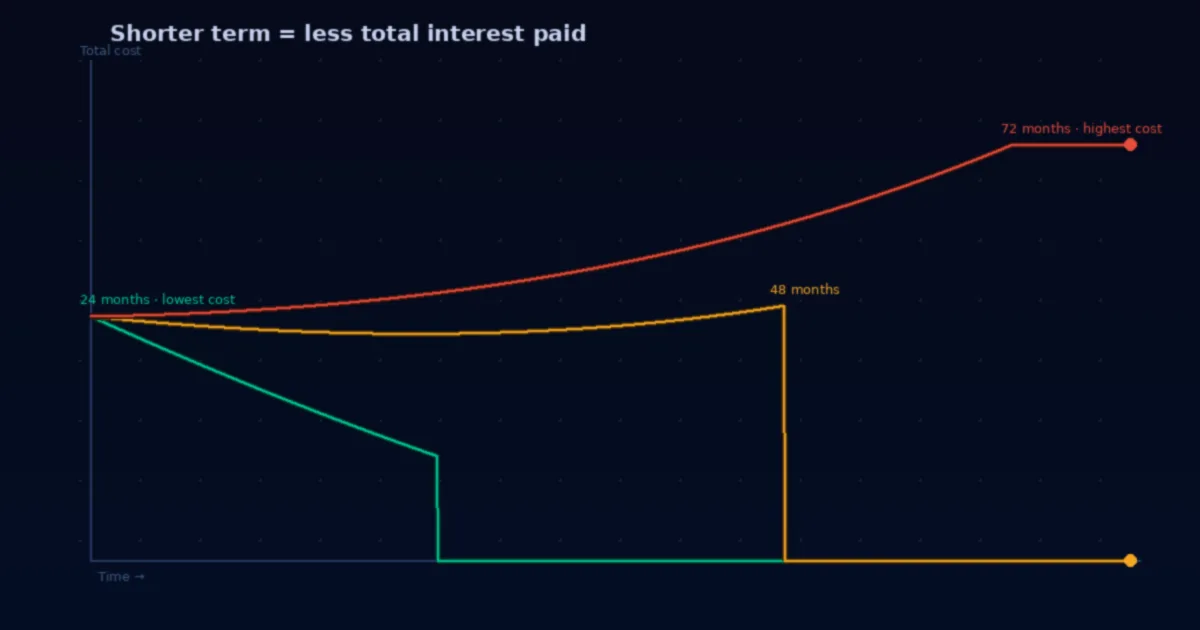
There's also the loan term. Want to pay back a personal loan in 24 months instead of 60? Lenders like that — lower risk — so they'll often quote you a slightly better rate. Want to stretch it to 72 months? They might bump the rate up a bit because you're borrowing the money for longer.
And then there's the loan amount. Banks have different appetite for different sizes. A R300,000 loan might actually have a slightly lower rate than a R50,000 loan because the admin cost is spread over a bigger amount.
The point: you're not powerless here. If you improve your credit score from 580 to 680, your rate probably drops. If you pay down some existing debt before applying for a new loan, your rate probably improves. If you shop around — actually comparing three or four lenders instead of just going to your current bank — you could save thousands.
Fixed vs Variable: The Trade-Off
Here's where it gets slightly more interesting. Some loans lock in a fixed rate. Others float with the market.
Right now, most South African personal loans are fixed-rate. You know what you're paying for the entire term. That's good — certainty. No surprises. But if rates drop, you're stuck paying the original rate.
Variable-rate loans are less common for personal loans (more common on home loans), but they exist. Your repayment goes up if the repo rate rises, down if it falls. If you think rates are about to drop, a variable rate is tempting. But we're in a holding pattern right now — the SARB just held steady in March and probably will again in May. So that bet isn't obvious.
The rule of thumb: take the fixed rate. You know what you're paying, you can budget properly, and you're protected if the SARB decides to hike. Certainty has value.
What You Actually Need to Do Right Now
If you need a loan, stop reading articles and go do three things.
First, check your credit score. Most credit bureaus in South Africa offer a free check once a year. You can get it for free — don't pay some website R50 for this. Knowing your score tells you what range of rates you'll actually qualify for.
Second, if your score is below 650, spend two months improving it before applying. Pay down store account balances, clear any outstanding collection items if you can, make sure every payment goes in on time. A 50-point improvement in your score could knock 2% off your rate. That's worth two months of waiting.
Third, compare at least three lenders. Not three quotes, because each quote checks your credit and that shows up on your report. Get a pre-qualification or indicative rate from multiple places. Capitec, FNB, Absa, maybe an African Bank if you're in a tight spot. See who offers what. Then apply to the one that makes sense.
And if you're looking at consolidating multiple debts, get specific numbers before deciding. The interest rate on a consolidation loan looks good until you realise you're stretching it over five years instead of paying it off in two.
The Bottom Line
Interest rates are the price of borrowing, and right now in South Africa, that price is determined by a combination of the SARB's decisions (repo rate at 6.75%), your creditworthiness (your credit score), and how risky the bank thinks you are (your debt-to-income ratio).
You can't control the repo rate. The SARB does that. But you can control the other two. Improve your credit score, reduce your debt, compare lenders properly, and you'll get a better rate. And on a loan, even 1% makes a real difference.
Stop accepting the first rate a bank quotes you. That number is not destiny. It's just the opening offer.