
On this page (12)
- 1.The Con Artists Are Getting Better
- 2.Why Loan Scams Work So Well in South Africa
- 3.The Upfront Fee Scam (And Why It's So Obvious Once You Know)
- 4.Fake Websites That Look Real Enough to Fool You
- 5.Social Media Offers That Prey on Urgency
- 6.Identity Theft Wrapped in a Loan Application
- 7.The SMS Trap: Loans You Never Applied For
- 8.The Mashonisa Connection
- 9.How to Verify a Lender in 5 Minutes
- 10.What Actually Happened If You Got Caught
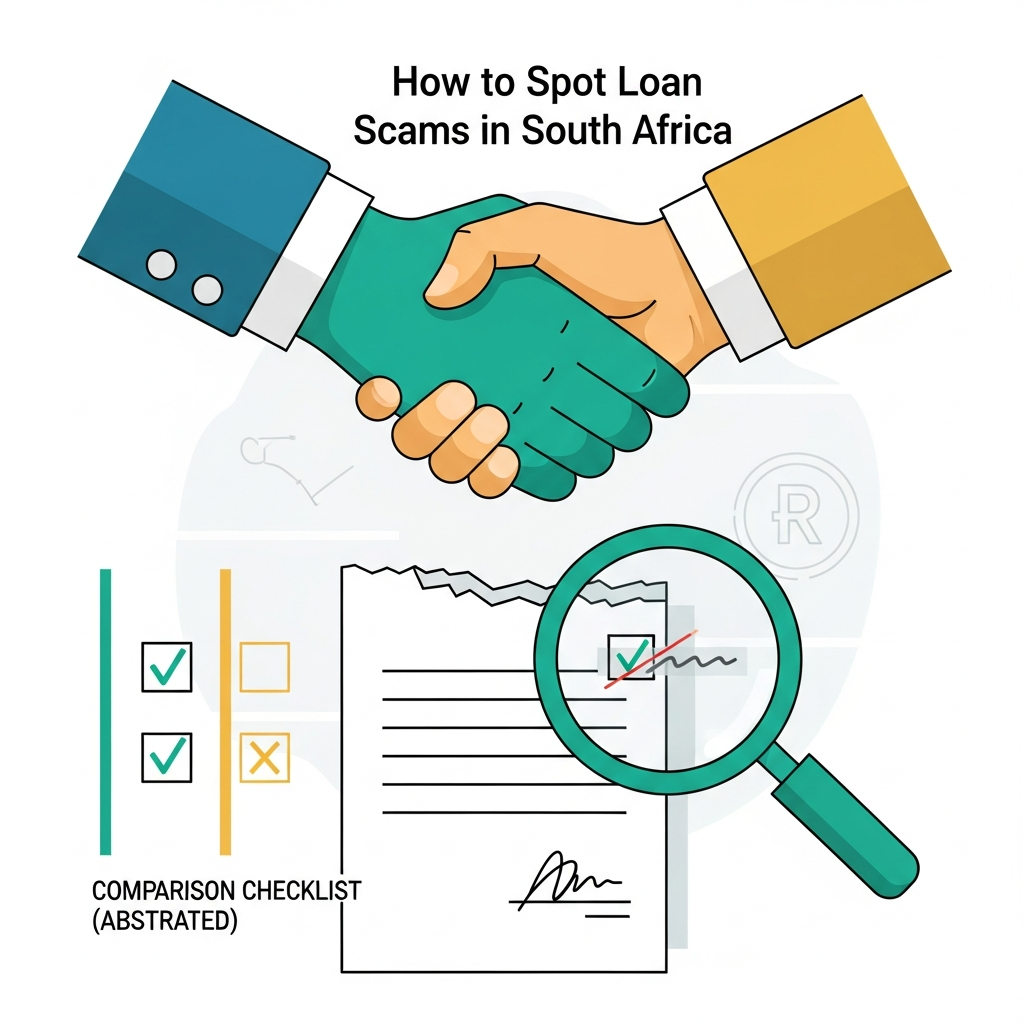
- 11.The Comparison: Real Lenders vs Scammers
- 12.What I Actually Think
The Con Artists Are Getting Better
Listen. In the past two years, fraud reports in South Africa have jumped 37.9%. Last year alone, more than half a million people got scammed — a 54.2% spike from the year before. And you know what? Most of them thought they were doing the right thing. They were just looking for a loan to cover something urgent.
That's what scammers rely on. They know you're desperate. Maybe it's January and your car broke down. Maybe there's a medical bill. Maybe the store accounts got too expensive. So when a WhatsApp message arrives offering R5,000 with no credit check, it feels like the answer to a prayer.
It's not. It's the start of something worse.
Why Loan Scams Work So Well in South Africa
South African lenders are heavily regulated — the National Credit Act is actually pretty good at protecting borrowers. But regulation is only useful if you know what to look for. Most people don't.
Scammers exploit that gap ruthlessly. They know that:
- You're probably stressed about money
- You might not know how to verify a lender is real
- You're more likely to check WhatsApp at midnight than to search the NCR database
- The logo on their website looks official because, frankly, it's copied from a real bank
The result? You hand over personal information. Or you send money. Or both. And then the loan never arrives.
The Upfront Fee Scam (And Why It's So Obvious Once You Know)
This is the most common trap in South Africa. Full stop. A "lender" contacts you and says: "Approved for R8,000. Transfer R450 for processing and we'll deposit by tomorrow."
Here's the thing: legitimate credit providers regulated by the National Credit Regulator never work this way. Never. If there are fees, they come off the loan amount you receive, or they're added to your repayment schedule. You never pay first and collect later. That's not how the NCA allows lenders to operate.
Every single upfront fee demand is a scam. Every one. I don't care if it sounds professional, if they have a website with a company registration number (which can be faked), or if your cousin says it worked for him. Upfront fees are 100% a red flag.
Fake Websites That Look Real Enough to Fool You
You find what looks like a FNB or Capitec loan page. The fonts are right. The logo is there. The terms and conditions are 15 pages long. You apply thinking you're going to get approved fast.
Nope. The site harvests your ID number, proof of income, bank account details, maybe even a copy of your ID. That data is either:
- Sold to actual illegal lenders (mashonisas)
- Used to open fraudulent accounts in your name
- Combined with other stolen info to commit full-scale identity theft
The biggest giveaway? A real lender's website has an NCRCP registration number visible. You can verify it on the official NCR site. If there's no number, or the number doesn't appear when you search for it, you're looking at a fake.
Social Media Offers That Prey on Urgency
Facebook is swimming in loan ads. "Instant approval" "No credit check" "Get cash by tonight." The testimonials look real. There are five-star reviews. The messaging is warm, personal, helpful.
It's all manufactured. The testimonials are either fake accounts or people paid to write them. The reviews are recycled from other scams. And the personal touch? That's automation designed to feel human.
Here's what I tell people: No registered South African lender processes a full loan application through WhatsApp or Facebook Messenger. Not Capitec. Not FNB. Not Nedbank. Not even the micro-lenders like Wonga or Mulah. They all have websites, proper applications, and real support channels. If the whole thing happens in messages, it's not a loan — it's a con.
Identity Theft Wrapped in a Loan Application
Some scammers don't even pretend to lend money. They set up what looks like a personal loan comparison site or a "credit profile checker." You fill in your details to "see what you qualify for." Or to "check your credit for free."
But there's no loan. There's no credit check. There's just your information being captured and sold. Sometimes to legitimate lenders (bad enough). Sometimes to other scammers. Sometimes to identity thieves who then apply for credit in your name.
The fix? Never enter personal info on a site unless you initiated the contact yourself and verified the URL is real. Type the URL manually into your browser — don't click links from emails or ads. Look for the padlock icon and "https://" in the address bar. And if they ask for your ID number and proof of income before you've even applied for anything? Close the tab.
The SMS Trap: Loans You Never Applied For
Your phone buzzes. "Congratulations! Your loan of R12,000 has been approved. Click here to claim or call 0844551234."
You didn't apply for a loan. But maybe it's from your bank about a pre-approval? So you click. Or you call the number.
The link takes you to a phishing site that looks like your bank. You enter your online banking username and password to "verify the claim." Congratulations — you just gave criminals access to your accounts.
Or you call the number and speak to someone who sounds official. They say they need to verify some details. Before you know it, they're asking for your PIN, your security codes, or a small "activation fee."
The rule is simple: If you didn't apply, you weren't approved. Banks and legitimate lenders don't send unsolicited loan approvals. Delete the message. Block the number. Move on.
The Mashonisa Connection
Some of these "lenders" are connected to actual loan sharks — mashonisas operating outside the law. The loan shark themselves might not scam you on the upfront fee (they want you to accept so they can trap you in a debt cycle), but they'll lend at rates so high they're illegal under the in duplum rule.
Real registered micro-lenders like Boodle and Mulah operate under NCA limits. A mashonisa doesn't. The interest they charge can be 10% a month or more. Miss a payment and you're looking at aggressive debt collection, harassment, or worse.
How to Verify a Lender in 5 Minutes
Before you apply anywhere:
- Check the NCR registry: Go to www.ncr.org.za and search for the lender by name. Every legitimate credit provider has a registration number. Write it down and verify the name matches exactly.
- Search CIPC: The Companies and Intellectual Property Commission database (cipc.co.za) confirms the business exists as a registered South African entity.
- Look for a physical address: Real lenders have offices. If they only give you a cellphone number or a PO Box, assume it's a scam.
- Check the website domain: Is it actually capitec.co.za or is it capitec-loans.co.za? Or capitec-loan-online.co.za? The fake variations are endless. Type the official website name directly into your browser.
- Read recent reviews: Search "[Lender Name] scam" or "[Lender Name] review" on Google. If dozens of people say it's a con, believe them.
What Actually Happened If You Got Caught
If you've already been scammed — whether you sent money, handed over your ID, or both — act today. Not tomorrow. Today.
- Call your bank immediately: If you shared banking details or made a payment, your bank needs to block transactions and lock your account. Don't wait.
- Open a case with SAPS: Go to your local police station and open a case for fraud. You need that case number for everything that follows.
- Report to the NCR: File a complaint at www.ncr.org.za or call 0860 627 627. They investigate illegal lending and can track patterns of scam lenders.
- Check your credit report: Get your free report from TransUnion (mytransunion.co.za), Experian (experian.co.za), or Compuscan (xds.co.za). Look for accounts you didn't open. Fraudulent accounts can show up within days.
- Consider a POPIA request: Under the Protection of Personal Information Act, you can request that your data be deleted from breached databases. Your attorney can help with this.
- Consider freezing your credit: Contact the credit bureaus to request a fraud alert on your file, which warns lenders to verify your identity before approving credit.
The Comparison: Real Lenders vs Scammers
Here's how to tell the difference in plain terms:
- Upfront fees: Real lenders: Never. Scammers: Always.
- Guaranteed approval: Real lenders: Impossible (NCA requires affordability checks). Scammers: Promise it constantly.
- Communication: Real lenders: Website, email, phone, branch. Scammers: WhatsApp, SMS, Facebook only.
- Speed: Real lenders: 1-3 business days. Scammers: "Tonight" or "within 2 hours."
- Interest rates: Real lenders: NCA maximums (repo + 21% for unsecured). Scammers: Offer rates so low they're obviously fake, or charge illegal rates after you're trapped.
- Personal approach: Real lenders: Treat you professionally. Scammers: Sound like your mate trying to help you out.
What I Actually Think
I've covered lending in South Africa for years. The thing that gets me most about these scams is how preventable they are. There's no mystery here. The rules are clear. The red flags are obvious. The verification tools exist and are free.
But people are tired. They're stressed about money. They're carrying too much debt already. And in that vulnerable moment, a scammer who sounds understanding and offers a quick fix feels like a lifeline.
Don't fall for it. Check the NCR registry. Read the terms carefully. And if something feels urgent and easy, it's usually a scam. Legitimate lending is boring. It takes time. It requires paperwork. It doesn't promise miracles.
Protect yourself by being suspicious. It's not paranoid — it's practical.